

Rejseforsikring til Costa Rica
- Dit pas skal være gyldigt min. 30 dage efter indrejsedatoen til Costa Rica. Læs mere herunder.
- Skal du opleve skønne Costa Rica? Så håber vi, at du får en god tur. Glem ikke at pakke en rejseforsikring fra Europæiske ERV til din rejse-eventyr!
Hvad skal du opleve på Costa Rica?
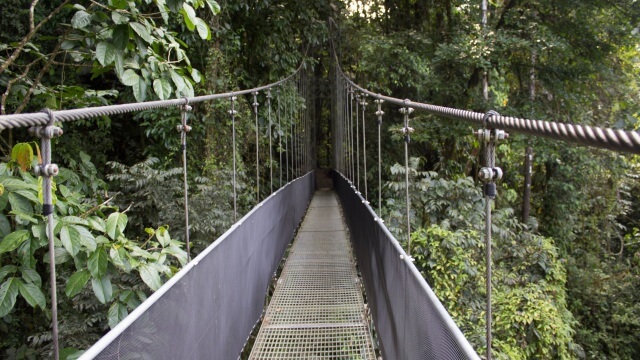
- Tågeregnskoven Monteverde: Udforsk skovens gangbroer og oplev forskellige arter af bl.a. fugle, sommerfugle og andre dyr i trækronerne.
- Vulkanen Arenal: Her kan du vandre rundt om en aktiv vulkan og nyde de varme kilder.
- Tortuguero Nationalpark: Du kan bl.a. se skildpadder, der lægger æg på stranden, og tage på en bådtur gennem kanalerne.
Oversigt
Hovedstad: San Jose (indb. 1,462 mio.)
Indbyggertal: 5.152.950 (2025 est.)
Religioner: Romersk-katolsk, evangelisk og pentekostalt, anden protestantisk, Jehovas Vidner
Sprog: Spansk, engelsk
Tidszone: UTC-6
Kørselsretning: Højre
Opkaldskode: +506
Stikprop(ber): Type A og Type B
Penge
Den lokale valuta i Costa Rica er costaricanske colones (CRC). Pr. 20. oktober 2026 svarer 100 CRC til 0,22 USD. Udover den lokale valuta kan USD accepteres som betaling nogle steder.
Valutaveksling kan foretages i lufthavne, banker, vekselkontorer og hoteller.
Rejsende bør være forberedt på at betale enten med kontanter eller kredit- eller betalingskort. Kreditkort accepteres bredt. Der findes hæveautomater de fleste steder.
US-dollar accepteres generelt ved større transaktioner og på nogle restauranter. Den lokale valuta anses dog for at være mest praktisk ved mindre køb.
Mange restauranter lægger 10 % servicegebyr til regningen. Hvis servicen var god, kan du give lidt ekstra til tjeneren. Det er almindeligt at give 500 CR (eller 1 USD) pr. drik i barer. Giv guidere mellem 10-15 USD pr. person afhængigt af turens størrelse. Giv 1-5 USD til taxachauffører afhængigt af afstand. Rund op ved korte distancer. Det er hensynsfuldt at give bagagebærere 1 USD pr. taske og efterlade 2 USD pr. dag til rengøringspersonalet.
Elektricitet
Strømforsyningen i Costa Rica er mindre pålidelig. Elektriciteten kører på 120V ved 60Hz med stiktype(r) A og B. Vandkraft dækker hele Costa Ricas elbehov. Landet har oplevet landsdækkende strømafbrydelser som følge af tørre vejrforhold og utilstrækkelige statslige investeringer i den nationale elinfrastruktur.
Pas
De fleste rejsende skal bruge pas for at komme ind i Costa Rica. Passet skal være gyldigt under hele opholdet og have en ledig side.
Visaer
Visumfri indrejse er tilgængelig for visse rejsende, der opfylder betingelser baseret på nationalitet og rejseformål. Alle andre rejsende skal skaffe visum fra den nærmeste ambassade eller konsulat eller ansøge online (e-visum) inden rejsen.
Krav til indrejsevisum varierer afhængigt af nationalitet, rejseformål og andre faktorer. Den enkelte rejsende er ansvarlig for at sikre, at alle visumkrav overholdes, hvilket bør bekræftes hos myndighederne på destinationen inden afrejse.
Visumfri rejse
Visumfri rejse til Costa Rica (30 dage): Udenlandske statsborgere fra lande klassificeret som Gruppe 2 får tilladelse til visumfri indrejse til Costa Rica i op til 30 dage. Rejsende kan ansøge om forlængelse op til samlet 90 dage fra indrejsetidspunktet.
Statsborgere fra Honduras skal fremvise en politiattest, uden apostille, som beviser, at de ikke har nogen straffeattest i deres oprindelsesland for at få visumfri adgang til Costa Rica.
Statsborgere fra Rusland og Nicaragua har visumfri ophold i op til 90 dage.
Visumfri rejse til Costa Rica (180 dage): Udenlandske statsborgere fra lande klassificeret som Gruppe 1 får tilladelse til visumfri indrejse til Costa Rica i op til 180 dage.
Visummer
Indrejsevisum (Gruppe 3): Udenlandske statsborgere fra lande klassificeret som Gruppe 3 skal have indrejsevisum for at få adgang til Costa Rica til turist- eller forretningsformål i op til 30 dage. Rejsende kan ansøge om forlængelse op til samlet 90 dage fra indrejsetidspunktet.
Indrejsevisum (Gruppe 4): Udenlandske statsborgere fra lande klassificeret som Gruppe 4 skal have indrejsevisum for at få adgang til Costa Rica til turist- eller forretningsformål i op til 30 dage. Rejsende kan ansøge om forlængelse op til samlet 90 dage fra indrejsetidspunktet.
Lokal rejse
Oversigt
Den vigtigste indgangsvej for internationale rejsende er Juan Santamaría International Airport (SJO/MROC); flyrejser betragtes generelt som en sikker rejseform. Hovedvejene er som regel velholdte og tydeligt afmærkede, selvom kørevaner anses for at være lavere end i Europa eller USA, og ulykker er almindelige. Køreforholdene kan være farlige i regntiden, især på bjergveje. Rejsende anbefales at køre defensivt og overholde alle færdselsregler. Både busser og officielle taxaer er sikre, hvor luksusbusser tilbyder en mere behagelig transportform; tyveri i overfyldt offentlig transport er dog almindeligt.
Rejse Sikkerhed
Flyrejser
Juan Santamaría International Airport (SJO/MROC) ligger 23 km (14 miles) nordvest for San Josés centrum, og Daniel Oduber Quiros International Airport (LIR/MRLB) i Liberia er landets anden store internationale lufthavn. Begge er effektive og generelt problemfri for besøgende. Besøgende bør kun benytte officielle lufthavnstaxaer, hvis forudbestilt transport ikke er tilgængelig. Licenserede taxaer er røde med gule trekanter på dørene. Der findes en taxaordning i lufthavnen med orange taxaer, som har væsentligt højere priser end de taxaer uden for lufthavnen. Samkørselsfirmaer som Uber er også bredt tilgængelige. Der er rapporteret om røverier i nærheden af Juan Santamaría International Airport, især mod biler.
Rejsende bør forvente lange køer ved sikkerhedskontroller, særligt i myldretiden. Rejsende bør holde godt øje med deres bagage under travle perioder, især i ferier og jul. Ved afrejse skal rejsende betale en udrejseafgift kontant. Indrejse til Costa Rica kan nægtes uden dokumentation for retur- eller videre rejse.
Indenrigsflyselskaber tilbyder daglige afgange til provinsbyer og mindre, mere afsidesliggende turistmål. De anses for sikre, selvom flyrejser i Costa Rica kan være risikable på grund af bjergrigt terræn og vejrforhold.
ID
De fleste rejsende skal bruge pas for at komme ind i Costa Rica. Passet skal være gyldigt i hele opholdets varighed og have mindst en blank side.
Rejsende med pas, hvor køn er angivet som "neutralt", kan blive nægtet indrejse. Kontakt den nærmeste ambassade, høje kommission eller konsulat for at bekræfte, om indrejse er tilladt med pas, hvor køn er angivet som "neutralt". Landets sociale accept af LGBTQ-personer er generelt god.
Den krævede pasgyldighed kan variere afhængigt af rejsendes nationalitet. Oplysninger om disse krav kan findes her.
Udrejse
Costaricanske borgere og fastboende, der rejser til Colombia, Brasilien, Peru, Bolivia, Ecuador, Trinidad og Tobago, Paraguay, Surinam, Guyana, Fransk Guiana, Venezuela og afrikanske lande, skal fremvise et gult feber-vaccinationsbevis for at få lov til at forlade landet. Rejsende skal have modtaget gul feber-vaccination 10 dage før rejsen.
Vejrejser
Trafikken i Costa Rica kører i højre side. Vejforholdene er rimelige på hovedruterne, men huller i vejene forårsaget af kraftige regnskyl i regnperioden er almindelige. I nogle områder skaber huller, skarpe sving, mangel på trafikskilte, jordskred og smalle eller ikke-asfalterede veje farlige forhold. I regnperioden kan jordskred blokere vejen mellem San José og Guapiles på vej til Limón og San José-Caldera-motorvejen. De ryddes dog hurtigt, og der findes længere alternative ruter. Ved broer bør bilister være forsigtige, da de ofte kun er envejs, selvom vejen er tovejs.
Bjergveje kan være snoede og farlige, og det er ikke usædvanligt, at hele vognbaner skylles væk under kraftige regnskyl, især mellem maj og november. Ved besøg i jungelområder bør erfarne lokale guider være til stede eller konsulteres om forholdene på forhånd. Ved besøg ved vulkaner bør man nøje følge meddelelser om forbud mod adgang til farlige områder, som normalt er lukkede for besøgende ved fare for udbrud.
Hastighedsgrænsen er 80 km/t på motorveje og 40 km/t i de fleste byområder; håndhævelsen er dog uregelmæssig. Ulykker i Costa Rica involverer ofte fartoverskridelser eller uforsvarlige overhalinger på blinde sving. Udvis stor forsigtighed, når du kører eller går, da bilister ikke respekterer færdselsreglerne. Episoder med vredesudbrud i trafikken er ikke usædvanlige. Bilister bør være særligt forsigtige efter mørkets frembrud, især på landeveje, da mange kører uden lys, og vejene ofte mangler ordentlig belysning og skilte. Sikkerhedsseler er obligatoriske. I San José gælder en lov, der begrænser, hvornår biler må køre på bestemte dage. Kriminelle forårsager nogle gange bevidste sammenstød for at stoppe biler og begå røverier eller andre forbrydelser; overvej at køre videre, indtil du når et sikkert sted som en politistation eller et garageanlæg. Det sidste ciffer på nummerpladen bestemmer, hvilke dage bilen må køre.
Offentlig transport
Busser: Der findes et omfattende net af bussruter i landet til rimelige priser. Costa Rica har to grundlæggende busser: direkte og indirekte. Indirekte busser tager ofte små omveje for at sætte passagerer af i små landsbyer langt fra hovedvejene, og de er meget langsomme. Når man rejser uden for San Josés storbyområde, bør billetter købes i forvejen, da busser især i weekender og ferier ofte er fyldte. Bussernes køreplan bliver ofte reduceret i den hellige uge (Semana Santa) og juleugen. Til længere ture bør udenlandske turister overveje private busselskaber, som tilbyder aircondition og mere komfortable sæder end det offentlige system. Flere selskaber, f.eks. Caribe Shuttle, tilbyder daglige ture mellem de større byer og turistmål.
Busserne holdes i god stand, og det offentlige bussystem i Costa Rica er pålideligt med hensyn til afgangs- og ankomsttider. Selvom busser generelt anses for sikre, er fyldte busser mål for lommetyve. Busstationer kan dog være meget farlige steder. Rejsende bør være meget opmærksomme og holde øje med deres bagage til alle tider, især på Coca Cola-terminalen i San José.
Taxaer: Taxaer findes i de fleste større byer, men kan være dyre, da de ofte tager overpris af turister. Sørg for, at taxameteret er tændt, og at din taxachauffør har gyldigt køretøjslicens (med navn og identifikationsnummer samt billede) synligt. Tag kun officielle taxaer, som er røde med en trekantet sticker og en plastikboks på taget med navnet og nummeret på taxiselskabet. Undgå at bruge uofficielle taxaer (piratas), da der er rapporteret om flere voldelige hændelser med turister. Brug, hvor muligt, radio-disponerede taxaer. Private samkørselsservices findes også i Liberia, La Fortuna og San José, og disse er ofte mere økonomiske end andre tjenester.
Biludlejning: Biludlejning i Costa Rica er pålideligt, tilbyder god service og har et udvalg af biler i forskellige prisklasser. Forsikring er obligatorisk og udgør størstedelen af lejeomkostningerne. De fleste store biludlejningsfirmaer er repræsenteret i Costa Rica sammen med flere lokale selskaber, og udenlandske kørekort er gyldige i op til 180 dage fra indrejsedatoen, afhængigt af den tildelte turistopholdsperiode. Biludlejning kan arrangeres online på forhånd, ved ankomsten til Juan Santamaría International Airport eller gennem større hoteller. Kun sikre og erfarne bilister bør overveje selv at køre i landet på grund af generel lav respekt for færdselsregler, uforudsigelige kørestil, dårlige vejforhold, kompliceret vejnet og høje omkostninger ved eventuelle skader på bilen.
*For at gøre det nemmere for dig er landeinformationen på denne side oversat til dansk af vores partner ved hjælp af maskinoversættelse. Selvom der er stræbt efter at levere en korrekt oversættelse, vil maskinoversættelse ikke være perfekt og skal derfor heller ikke læses eller fortolkes som sådan. Hjemmesiden og informationen på denne skal ikke opfattes som en kilde til rådgivning eller handling i forhold til indholdet. Ingen garanti givet eller underforstået, intet krav eller ansvar accepteres.

- {{originalfilename}} x
Kan jeg bestille en rejseforsikring til landet?
Vores forsikringer er ikke gyldige for rejser til et land eller område, som Udenrigsministeriet fraråder at besøge eller opholde sig i i sine rejsevejledninger. Læs mere på um.dk >
Har Udenrigsministeriet ikke en rejsevejledning, kan du kontakte vores kundeservice på tlf: 33 25 25 25 for at høre om, du kan tegne en forsikring.